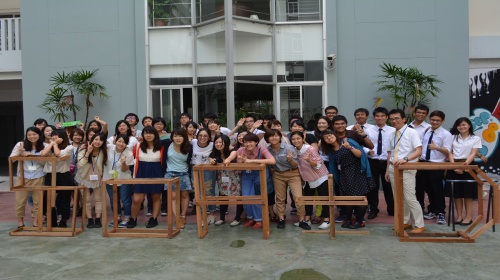
This is an original School of Agriculture program for short stays in Thailand. It began in the 2013 academic year with the cooperation of related institutions in the country, including Kasetsart University, which has concluded a partnership agreement with Meiji University, as well as King Mongkut's Institute of Technology Ladkrabang, Srinakharinwirot University, and the Food and Agriculture Organization of the United Nations (FAO).
By participating in this program, students get a first-hand experience of climate, culture, history, language, and lifestyle differing from their Japanese counterparts. They also have opportunities for learning, experience, and interchange through various activities that could only be offered by the School of Agriculture, including on-site fieldwork programs (on the sites of overseas farms, markets, and factories), mock UN conferences at FAO Regional Office for Asia and the Pacific, workshops held with students of the interfaculty partner schools, and visits with School of Agriculture alumni active in the area.
Although the stay has a short duration of only about one week, the program is an intensive one engaging all five senses. By giving the students a close look at another country, it also prompts them to view Japan from the outside. It is likewise a golden opportunity for them to acquire knowledge about and observe agriculture from an international perspective. We strongly urge students to participate in it.