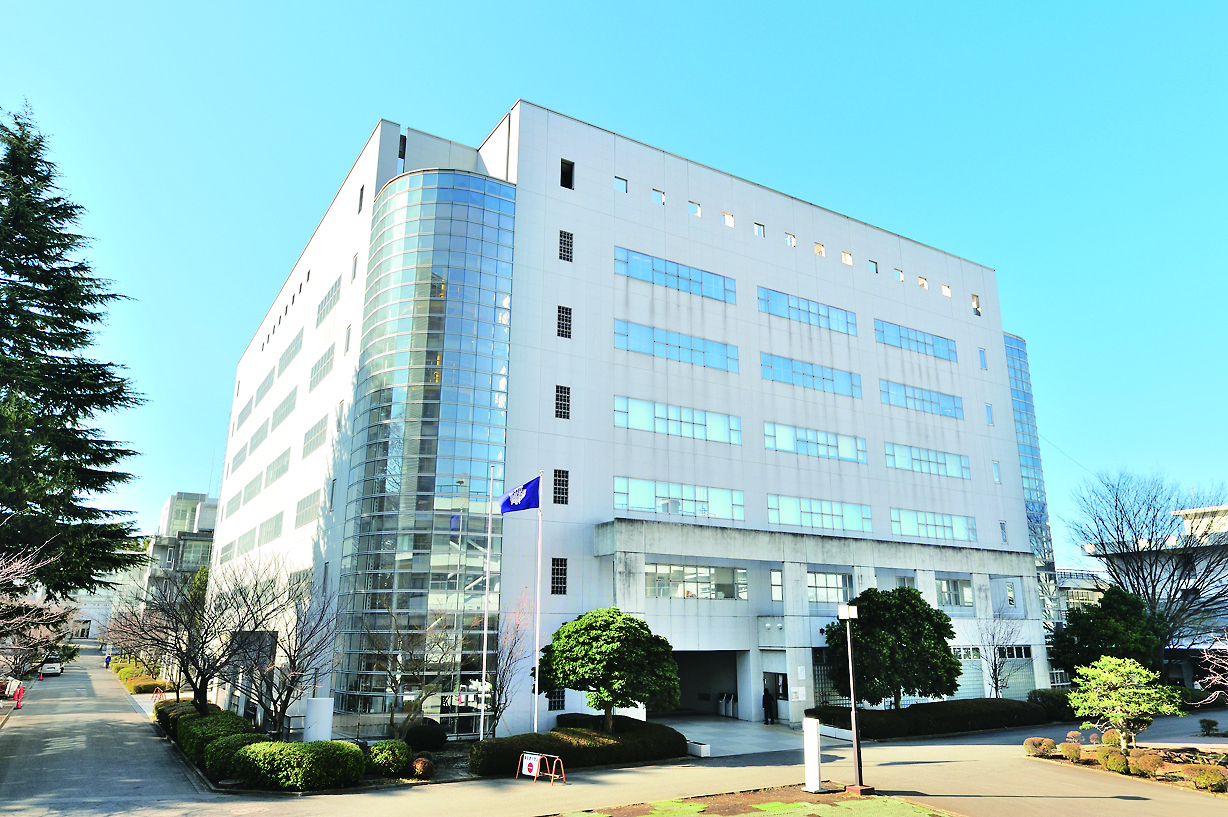
School of Agriculture

School of Agriculture

About our school

The School of Agriculture’s fundamental philosophy is to pursue the endurance of mankind. Based on this, we have established a broad-ranging curriculum that focuses on ensuring a stable supply and effective use of food, as well as the preservation of an environment that supports not only human life, but all other life forms as well.

We at the School of Agriculture seek to use our education and research activities to contribute to the search for answers to the many issues we face. For instance, we analyze the vital functions of various organisms and investigate how those functions can be used effectively to produce and distribute food and ingredients and, furthermore, to maintain and create “green” living environments that enrich and ease people’s minds.

The School of Agriculture was founded in 1946 as the Meiji Agricultural Vocational School. Since then, we have sought to innovate and expand to meet society’s ever-changing needs. Today, the school is a broad-based institution where the faculty of our four departments (the Department of Agriculture, the Department of Agricultural Chemistry and the Department of Life Sciences, which focus on natural science; and the Department of Agri-food and Environmental Policy, which focuses on social sciences) work closely with faculty who teach general education (humanities) to provide a brand of education that fuses science and humanities. Students’ studies are not limited to the specialist subjects of their major courses; they may also elect to take other departments’ major subjects, thus affording them a comprehensive education that goes beyond the boundaries of individual academic department.

Meanwhile, the Graduate School of Agriculture offers four master’s degrees and doctorates programs: Agricultural Chemistry, Agriculture, Agricultural Economics, and Life Sciences.

We seek to address the three key issues of the 21st century—food, life and the environment—with a unique brand of education and research that focuses on themes highly relevant to the current age, such as food production and environmental conservation, industrial and social systems that nurture life, biological functions and biotechnology, and life and genes. Through this, we aim to produce graduates with broad-based knowledge and technical skills, as well as a high level of communicative ability and the capacity to work independently.

We have two research farms on the Ikuta Campus, as well as the Honda Farm in Chiba City, which is used for production experiments and other practices. In addition, we plan to open a new farm in the Kurokawa precinct of Kawasaki City in 2012. In addition to biological and production experiments, the new farm will be used for hands-on study of a range of systems, including futuristic ecosystems, systems for maintaining a lifestyle in symbiosis with satoyama community-administered bush land, and other systems involving cooperation with local communities.

Campus
Department
  • Agriculture
  • Agri-food and Environmental Policy
  • Agricultural Chemistry
  • Life Sciences