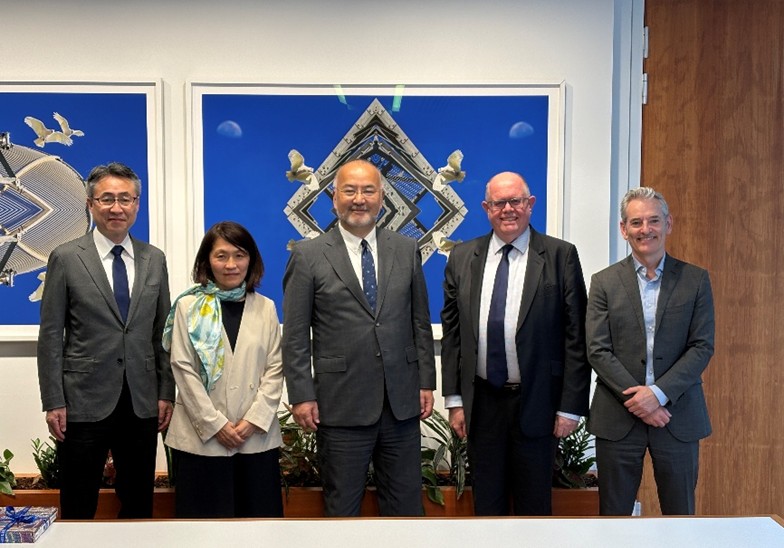
The Organization for International Collaboration is working to strengthen collaboration with overseas partner institutions and to enhance study-abroad support systems in order to expand global learning opportunities for students. As part of this international strategy, President UENO Masao Ueno, Vice President KOMA Kyoko (in charge of international affairs), ITO Hideki, Director of the International Education Center, and dedicated staff members from the Office of International Collaboration visited Sydney, Australia to hold discussions with partner institutions, from November 1 to 5, 2025.
The primary purpose of this visit was to conduct site visits and strengthen partnerships in preparation for the planned revision of the “Overseas Top University Study Abroad Incentive Grant” program scheduled for the 2027 academic year.
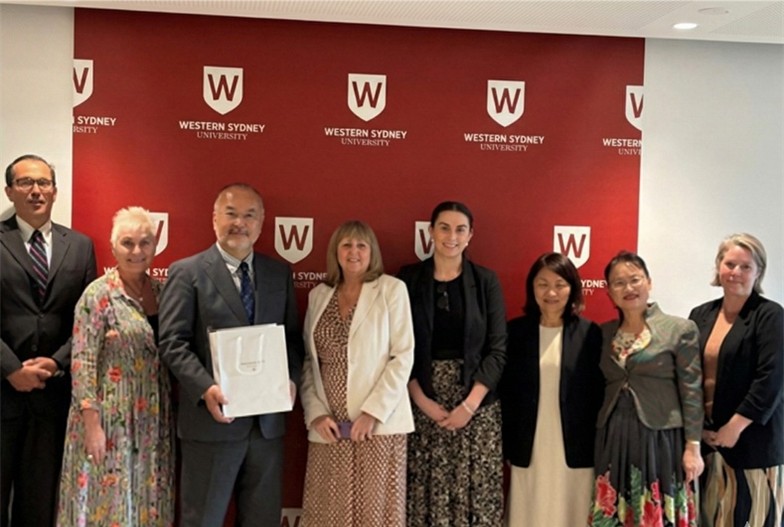
The President, Vice President, and others visited candidate institutions for the new “Top B” framework targeting countries other than the United States, and additionally visited Western Sydney University, a partner institution of our university, where they exchanged views on promoting the use of the international collaboration platform established there and further deepening the mutual relationship.
1. Destinations and main achievements: Deepening collaboration with world-class universities
University of Technology Sydney (UTS)
University of Technology Sydney is one of the Top B candidate institutions. The Top B Grant is, in principle, designed to support various types of study abroad programs for universities ranked within the top 100 globally, including institutions outside the United States.
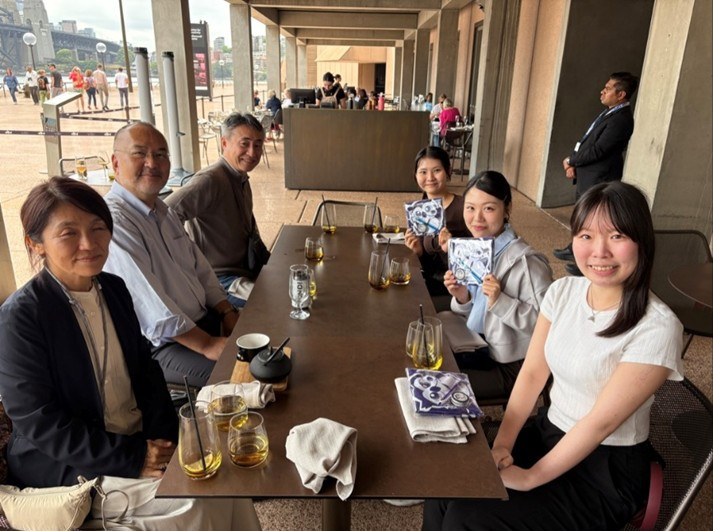
They met with university executives led by President Parfitt to express appreciation for the exchanges over the 10 years since the agreement was signed and to exchange views on expanding future cooperation. The university proposed forward-looking initiatives, including expanding exchanges in science and engineering fields—including doctoral programs—and developing education and research with an eye toward SDGs and collaboration with industry. Our university proposed jointly implementing international collaborative programs, including online courses, to enable more students to experience their educational offerings, as well as the possibility of exchange courses involving both faculty and students. Both parties agreed to continue discussions on these proposals. Additionally, a meeting was held with our students currently studying at the university or the University of New South Wales (UNSW), confirming high satisfaction with both the learning environment and living conditions.
Western Sydney University (WSU)
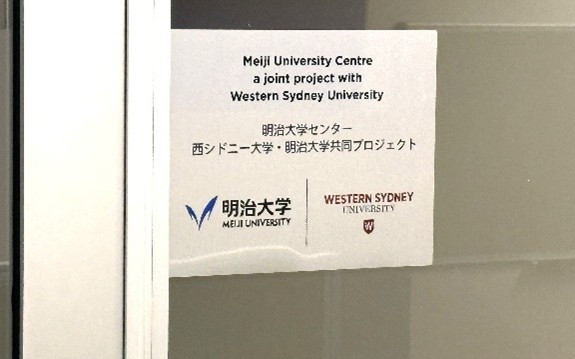
At Western Sydney University, they discussed the utilization of the Meiji Centre, an international collaboration platform that was jointly established with our university in 2019. Taking into account university reforms underway at that university, such as the digitization of education and faculty reorganization, they exchanged views on the future form of educational and research exchanges.
The university expressed expectations for student dispatches using our university’s English-taught courses and for research exchanges including doctoral students. Our university presented its reception framework centered on approximately 400 English-taught courses and diverse research fields, while also explaining the potential for collaborative education and research based on the platform. Furthermore, the International Office at Western Sydney University has positioned our university as a “priority partner institution” and confirmed plans to further expand dispatches to our university going forward. In addition, they shared a direction for expanding reciprocal exchanges, such as requesting the dispatch of students who study Japanese to our university.
2. Outlook for the internationalization strategy: Further expansion of financial support
During this visit, they confirmed the path forward for laying the groundwork to expand student dispatches through visits to the Top B candidate universities and deepening educational and research exchanges using the international collaboration platform. They also gained insight into the actual learning outcomes and living conditions of students studying on site. Australia, which offers an outstanding study-abroad environment in terms of safety, educational standards, and internationality, will become an increasingly important partner for our university in pursuing its broader and more extensive study-abroad policy.
Building on the outcomes gained this time, our university will further advance initiatives to strengthen cooperation with international partner institutions and enhance the quality of international education, expanding the learning opportunities that support students’ global futures.
≪Japanese version≫