


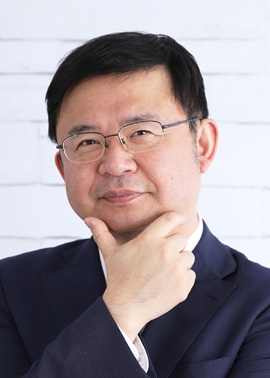
 KATO Toru
Dean, Graduate School of Humanities
KATO Toru
Professor
The Graduate School of Humanities was established at the Izumi Campus in April 2008. It is hard to believe how quickly time has passed. This spring (2026), it turns eighteen – the age of adulthood in human life. During this period, the Graduate School has steadily matured, awarding 195 master’s degrees and 13 doctoral degrees.
However, given the title “Humanities,” many people may still wonder what, precisely, students study here and how their learning is structured.
A graduate school is a place to pursue advanced expertise. Article 99, Paragraph 1 of the School Education Act defines its purpose as follows:
“A graduate school makes its purpose one of teaching and researching the theory and application of scholarly activities and mastering their depths, or fostering deep knowledge and outstanding abilities in order to serve occupations requiring high levels of expertise, to contribute to the advancement of culture.”
Some may ask:
“Undergraduate students usually take the humanities or liberal arts courses in their first or second year. Why, then, should they continue this study at the graduate level?”
However, liberal arts learning and specialized expertise should not be seen as separate domains. The assumption that the liberal arts are merely preparatory, while specialized fields represent advanced study, is a misconception.
Let me explain the difference between liberal arts learning and specialized expertise through a metaphor.
In English, those who work independently are called “freelancers”– literally, “free lances.” In earlier times, mercenaries or foot soldiers needed their own weapons and a map of the world. To determine where they might succeed and whom they should serve, a map was indispensable. In modern society, that map may take the form of a digital map, constantly updated online.
Yet a map is not merely a tool for reaching a destination. When we encounter others, we bring our respective maps together, sharing our paths and perspectives, forming teams, and work collaboratively to solve problems.
Weapons symbolize specialized expertise, and maps stand for liberal arts learning. For some, creating the map itself is their weapon; in other words, the liberal arts constitute their specialization.
Today, in the twenty-first century, science and technology advance at an astonishing rate, social norms are continually being reshaped, and global power structures can shift dramatically within a short span of time. In such an age, both individuals and organizations develop the capacity to continually redesign their intellectual frameworks, just as a digital map is constantly updated.
The name “Graduate School of Humanities” may suggest a graduate school centered on liberal arts learning. Yet the word “humanity” also carries another meaning – the state of being human. Amid the upheavals of modern society, how can we live with dignity as human beings? How can we reconnect fragmented fields of knowledge and reshape our intellectual frameworks to create a society in which people can live with integrity? These are the questions explored at this Graduate School.
What research, then, are our faculty members and students pursuing? Many of their papers are available online, and faculty members have also co-authored books such as Yasei no Kyoyo (Wild Education). I invite you to take a look at these works.
While our research areas are not unique in their categories, they span a wide range of fields, including literature, sports studies, intellectual history, science and technology, politics, and economics. What distinguishes our Graduate School from others lies in our approach to research.
The “human resource development and other educational and research objectives” stated on the university’s official website are as follows:
“The Graduate School of Humanities aims to foster individuals who can respond to the diverse challenges facing humanity in the twenty-first century in a comprehensive and interdisciplinary manner, and who can act autonomously from a public-minded perspective. Its themes in education and research are ‘exploring humanity and its proper environment’ and ‘creating(designing) knowledge’ for a new era.”
Many people today struggle to live with dignity. What, then, can be done? Let us examine this question from multiple perspectives. Let us exchange ideas. Let us share the fruits of our research with society. Despite the wide range of research topics we pursue, this is the common commitment shared by our faculty members and students.
The Graduate School offers three courses: Ethics, Philosophy and Religion, Culture, and Peace and the Environment. Students are encouraged to enroll in classes across courses as well. For example, students exploring contemporary themes such as ACG (anime, comics, and games) or LGBTQ issues may draw on historical insights in their scholarly writing. Conversely, those engaged in the study of classical texts and traditions can also reflect on questions of cultural transmission and the consequences of nationalism in the modern era. Others working in the natural sciences may incorporate theories from the humanities and social sciences into their research. This ongoing movement of ideas across disciplinary boundaries is a defining characteristic of our Graduate School.
Some students conclude their studies at the master’s level, while others continue on to the doctoral program with the aim of pursuing an academic career.
Beyond our regular curriculum, we also host special lectures, audiovisual research programs, and other events open to the public. We warmly invite your participation and encourage you to contact our office for further information.