


This year, we once again held the ABR Joint Seminar in collaboration with the University of Southern California (USC) and the Kishi Seminar.
This joint seminar began three years ago, following an inquiry from Professor Miya at USC. USC students engage in a wide range of artistic practices, including film, dance, fiction, and visual arts. The Kishi Seminar conducts research on the themes of “coexistence” and “communication,” utilizing art as a research method. The ABR Joint Seminar brings together students from different cultural backgrounds and fields of study to experience each other’s work and exchange ideas. This year, too, it was a valuable opportunity where diverse values, experiences, and interests intersected, giving rise to new discoveries and perspectives.
◾️Understanding Differences in Values Through Numbers
This year’s joint seminar featured three main activities. The first was an ABR practical session on intercultural communication, planned primarily by the 8th cohort of the Kishi Seminar. In this exercise, participants used numbers and other tools to express differences in values and cultural backgrounds—which are difficult to convey through words alone—and shared their thoughts and experiences with one another. Even when answers appeared similar, the reasons for choosing those specific numbers differed from person to person. At the same time, unexpected commonalities were sometimes discovered among differing responses. By using numbers as a starting point to discuss their individual experiences and perspectives, participants gained insight into differences in values that are often difficult to discern through everyday conversation alone, thereby deepening their dialogue.
◾️Reflecting on Majorities and Minorities Through Physical Activity
The second initiative was a “Minority Sports” session developed by the 9th cohort of the Kishi Seminar. Minority Sports are low-impact activities with rules and methods adapted so that anyone can participate, regardless of whether they have a disability or their athletic ability. Rather than focusing solely on winning or competing for athletic prowess, the goal is to create a space where all participants can enjoy themselves together while embracing their individual differences. As students from different linguistic and cultural backgrounds shared this time together through physical activity, they naturally began striking up conversations and smiling at one another. Moving their bodies together—rather than relying solely on words—helped bridge the gap between them and served as a catalyst for communication.
◾️Sharing Research and Interests in Six Groups
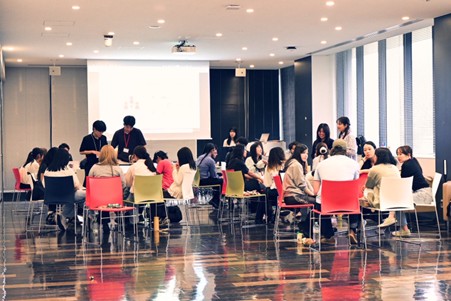
The third event was a networking session attended by a total of 51 people.
Participants were divided into six groups and gave presentations on the ABR practices being undertaken by the Kishi Seminar. While exchanging views with students from the University of Southern California, they shared the objectives and methods of their respective practices, as well as the insights they had gained from them. In addition, students from the University of Southern California introduced their own research and creative projects, including film, dance, fiction, and visual art. Being exposed to different modes of expression and fields of study provided an opportunity to reflect on the diverse connections between art and research.
◾️Re-examining Our Own Research by Communicating in English
Explaining their research and engaging in discussions in English was a major challenge for the students in the Kishi Seminar. However, as they sought to convey their practices to an audience with different cultural backgrounds, they began to recognize characteristics and challenges in their research that they had not previously noticed. The questions and opinions raised by the USC students also served as an opportunity to reexamine their own research from a different perspective and deepen their understanding of ABR. It was not merely a matter of presenting in English; the very act of refining their explanations in response to the audience’s reactions became a vital dialogue for understanding each other’s perspectives.
◾️Another Form of Exchange Born Over Sweets
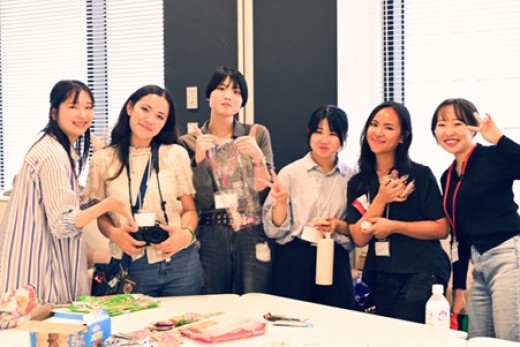
At the end of the exchange event, we held a “sweets party” where everyone brought American and Japanese treats. As we discussed differences in taste, texture, and packaging, and shared recommendations for our favorite snacks, a relaxed conversation emerged—one quite different from the atmosphere during the research presentations. Using our familiar food cultures as a starting point, the time we spent talking about our respective lifestyles and preferences became another valuable opportunity to get to know one another.
◾️Dialogue Born from Our Differences
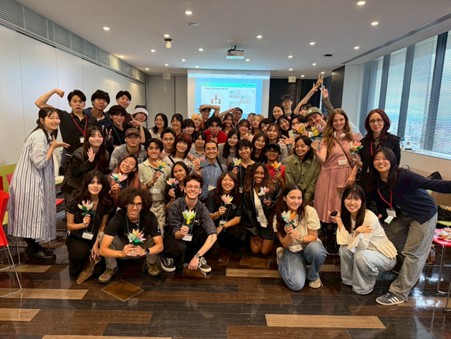
We were once again able to create a very fulfilling experience together at this year’s ABR Joint Seminar. Through various forms of expression, we got to know one another, reexamined our own research, and returned home with new questions and interests. Now in its third year, the ABR Joint Seminar has become an irreplaceable experience for each and every participant.
≪Japanese version≫
This joint seminar began three years ago, following an inquiry from Professor Miya at USC. USC students engage in a wide range of artistic practices, including film, dance, fiction, and visual arts. The Kishi Seminar conducts research on the themes of “coexistence” and “communication,” utilizing art as a research method. The ABR Joint Seminar brings together students from different cultural backgrounds and fields of study to experience each other’s work and exchange ideas. This year, too, it was a valuable opportunity where diverse values, experiences, and interests intersected, giving rise to new discoveries and perspectives.
◾️Understanding Differences in Values Through Numbers
This year’s joint seminar featured three main activities. The first was an ABR practical session on intercultural communication, planned primarily by the 8th cohort of the Kishi Seminar. In this exercise, participants used numbers and other tools to express differences in values and cultural backgrounds—which are difficult to convey through words alone—and shared their thoughts and experiences with one another. Even when answers appeared similar, the reasons for choosing those specific numbers differed from person to person. At the same time, unexpected commonalities were sometimes discovered among differing responses. By using numbers as a starting point to discuss their individual experiences and perspectives, participants gained insight into differences in values that are often difficult to discern through everyday conversation alone, thereby deepening their dialogue.
◾️Reflecting on Majorities and Minorities Through Physical Activity
The second initiative was a “Minority Sports” session developed by the 9th cohort of the Kishi Seminar. Minority Sports are low-impact activities with rules and methods adapted so that anyone can participate, regardless of whether they have a disability or their athletic ability. Rather than focusing solely on winning or competing for athletic prowess, the goal is to create a space where all participants can enjoy themselves together while embracing their individual differences. As students from different linguistic and cultural backgrounds shared this time together through physical activity, they naturally began striking up conversations and smiling at one another. Moving their bodies together—rather than relying solely on words—helped bridge the gap between them and served as a catalyst for communication.
◾️Sharing Research and Interests in Six Groups
The third event was a networking session attended by a total of 51 people.
Participants were divided into six groups and gave presentations on the ABR practices being undertaken by the Kishi Seminar. While exchanging views with students from the University of Southern California, they shared the objectives and methods of their respective practices, as well as the insights they had gained from them. In addition, students from the University of Southern California introduced their own research and creative projects, including film, dance, fiction, and visual art. Being exposed to different modes of expression and fields of study provided an opportunity to reflect on the diverse connections between art and research.
◾️Re-examining Our Own Research by Communicating in English
Explaining their research and engaging in discussions in English was a major challenge for the students in the Kishi Seminar. However, as they sought to convey their practices to an audience with different cultural backgrounds, they began to recognize characteristics and challenges in their research that they had not previously noticed. The questions and opinions raised by the USC students also served as an opportunity to reexamine their own research from a different perspective and deepen their understanding of ABR. It was not merely a matter of presenting in English; the very act of refining their explanations in response to the audience’s reactions became a vital dialogue for understanding each other’s perspectives.
◾️Another Form of Exchange Born Over Sweets
At the end of the exchange event, we held a “sweets party” where everyone brought American and Japanese treats. As we discussed differences in taste, texture, and packaging, and shared recommendations for our favorite snacks, a relaxed conversation emerged—one quite different from the atmosphere during the research presentations. Using our familiar food cultures as a starting point, the time we spent talking about our respective lifestyles and preferences became another valuable opportunity to get to know one another.
◾️Dialogue Born from Our Differences
We were once again able to create a very fulfilling experience together at this year’s ABR Joint Seminar. Through various forms of expression, we got to know one another, reexamined our own research, and returned home with new questions and interests. Now in its third year, the ABR Joint Seminar has become an irreplaceable experience for each and every participant.
≪Japanese version≫